Consolidation of Archaeological Paleosols with Ethyl Silicate and Local Matrix: Experience in Rumipamba, Ecuador
DOI:
https://doi.org/10.5281/zenodo.20040746Keywords:
archaeological paleosols, ethyl silicate, ESTEL 1200, in situ conservation, structural consolidation, Rumipamba site, cultural heritageAbstract
This study presents the results of a consolidation process applied to archaeological paleosols using a mortar formulated with ethyl silicate (ESTEL 1200) and local paleosol in archaeological contexts affected by disintegration processes and capillary moisture. The intervention was conducted in Rumipamba Archaeological Park, Quito, Ecuador, within the framework of the heritage conservation project executed by the Metropolitan Institute of Heritage (2023–2024). The methodology included physicochemical characterization of the paleosol (grain size analysis, X-ray diffraction, pH, organic matter content), formulation and application of the mortar in a 1:1.5 ratio (silicate:paleosoil), and post-intervention evaluation at 30, 60, and 90 days through parameters of structural cohesion, chromatic integration (ΔE < 3), vapor permeability, microbial resistance, and dimensional stability. Results show structural cohesion of 85% at 90 days, visually imperceptible chromatic integration (ΔE < 3), acceptable physicochemical compatibility, and no visible colonization during the monitoring period. These preliminary findings (90‑day follow‑up) suggest the technical viability of combining paleosol and ethyl silicate in high-edaphic-moisture environments, and provide empirical evidence for the development of archaeological conservation protocols in Ecuador.
Downloads
Author Biography
Carlos Alberto Ramírez Gangotena, ARSREDEMPTOR S.A.
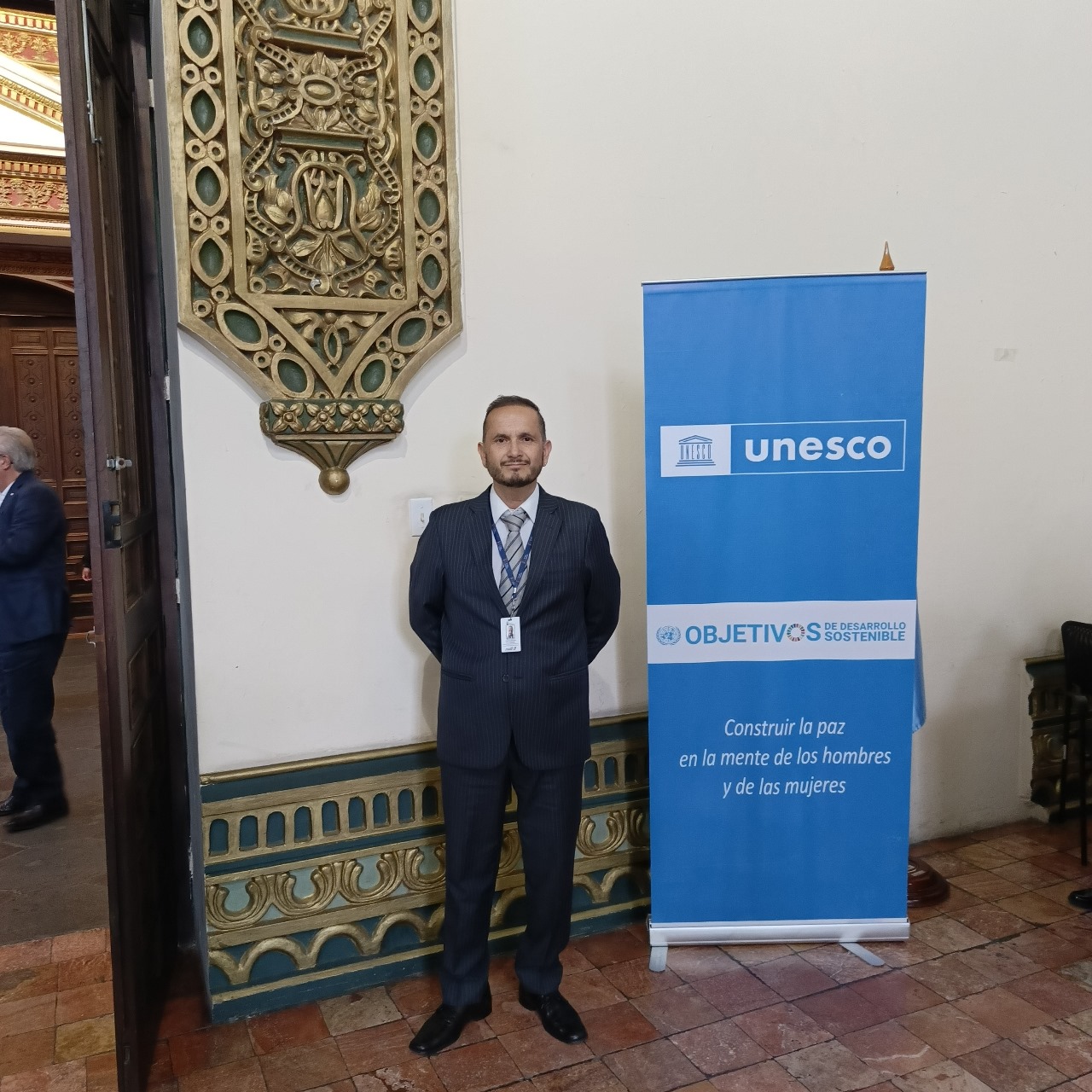
Conservador-restaurador del patrimonio cultural. Magíster en Finanzas. Magíster en Gestión Cultural. Consultor independiente. Exdocente universitario. Especialista en conservación arqueológica, patrimonio urbano y gestión técnica de sitios culturales.
References
American Society for Testing and Materials-ASTM D422-63(2007)e2. (2007). Standard Test Method for Particle-Size Analysis of Soils. ASTM International.
Asociación Española de Normalización y Certificación [AENOR]. (1999). Métodos de ensayo para piedra natural. Determinación del coeficiente de absorción de agua por capilaridad. AENOR.
Brandi, C.(1963). Teoría de la restauración (2ª ed.). Alianza Editorial.
Caple, C. (2000). Conservation Skills: Judgement, Method and Decision Making (1st ed.). Routledge. https://doi.org/10.4324/9780203086261
Cronyn, J. M. (1990). The Elements of Archaeological Conservation. Routledge.
Delgado Rodrigues, J. (2001). Consolidation of decayed stones: A delicate problem with few practical solutions. En P. B. Lourenço y P. Roca (Eds.), Historical Constructions (pp. 3-14). University of Minho.
Franzoni, E., Graziani, G., & Sassoni, E. (2015). TEOS-based treatments for stone consolidation: acceleration of hydrolysis-condensation reactions by poulticing. Journal of Sol-Gel Science and Technology, 74(2), 398–405. https://doi.org/10.1007/s10971-014-3610-3
Goldberg, P., & Macphail, R. I. (2006). Practical and Theoretical Geoarchaeology. Blackwell Publishing.
He, J., Otero, J., Crespo-López, L., Monasterio-Guillot, L., Benavides-Reyes, C., Elert, K., & Rodriguez-Navarro, C. (2024). Ethyl silicate–nanolime treatment for the consolidation of calcareous building materials. Construction and Building Materials, 418, 135437. https://doi.org/10.1016/j.conbuildmat.2024.135437
International Council of Museums – Committee for Conservation [ICCROM]. (2007). Preventive conservation: Concepts and strategies.
International Council on Monuments and Sites [ICOMOS]. (1964). Carta internacional sobre la conservación y la restauración de monumentos y sitios (Carta de Venecia 1964).
Resolución Nro. 037-DE-INPC-2021 [Instituto Nacional de Patrimonio Cultural-INPC]. Instructivo técnico para la presentación de propuestas e informes de proyectos arqueológicos y paleontológicos. 21 de junio de 2021.
Rocha Reyes, J. M. & Ruigómez Correa, A. J. (2025). La reintegración cromática en superficies pétreas expuestas a la luz natural. En Y. Jáidar Benavides, V. Magar Meurs, & M. C. Ruiz Martín (Coords.). Criterios de conservación del patrimonio en piedra (pp. 373-399). Secretaría de Cultura, INAH, UNAM-IIE, ICCROM. https://www.iccrom.org/es/publication/criterios-de-conservacion-del-patrimonio-en-piedra
Scherer, G. W., & Wheeler, G. S. (2008). Silicate Consolidants for Stone. Key Engineering Materials, 391, 1–25. https://doi.org/10.4028/www.scientific.net/KEM.391.1
Serrano Vincenti, S., Ruiz, J. C., & Bersosa, F. (2017). Heavy rainfall and temperature projections in a climate change scenario over Quito, Ecuador. La Granja: Revista de Ciencias de la Vida, 25(1), 16-32. https://doi.org/10.17163/lgr.n25.2017.02
UNESCO. (2015). Recomendación sobre la protección y promoción de los museos y colecciones, su diversidad y su función en la sociedad. https://www.unesco.org/es/legal-affairs/recommendation-concerning-protection-and-promotion-museums-and-collections-their-diversity-and-their
Wheeler, G. (2005). Alkoxysilanes and the Consolidation of Stone. Getty Conservation Institute. https://www.getty.edu/conservation/publications_resources/books/consolidation_of_stone.html
Zornoza-Indart, A. & Lopez-Arce, P. (2016). Silica nanoparticles (SiO2): Influence of relative humidity in stone consolidation. Journal of Cultural Heritage, 18, 258-270. https://doi.org/10.1016/j.culher.2015.06.002
Additional Files
Published
How to Cite
Issue
Section
License
Copyright (c) 2026 Carlos Alberto Ramírez Gangotena

This work is licensed under a Creative Commons Attribution-NonCommercial-ShareAlike 4.0 International License.
INPC, Revista del Patrimonio Cultural del Ecuador provee acceso libre a su contenido digital para lectura y descarga, con el propósito de democratizar el conocimiento y la difusión de la investigación. Se permite el acceso y empleo del material siempre y cuando se reconozca a los autores/as, no se lo use comercialmente y se lo comparta con un criterio similar.
Los autores/as conservarán sus derechos de autor; podrán difundir sus artículos en otras obras impresas o digitales, sitios personales o institucionales, dando crédito a su publicación original en esta revista, reconociendo así su trabajo editorial y potenciando su alcance.